Beatland: Ninjapaw's Revenge | First Playable
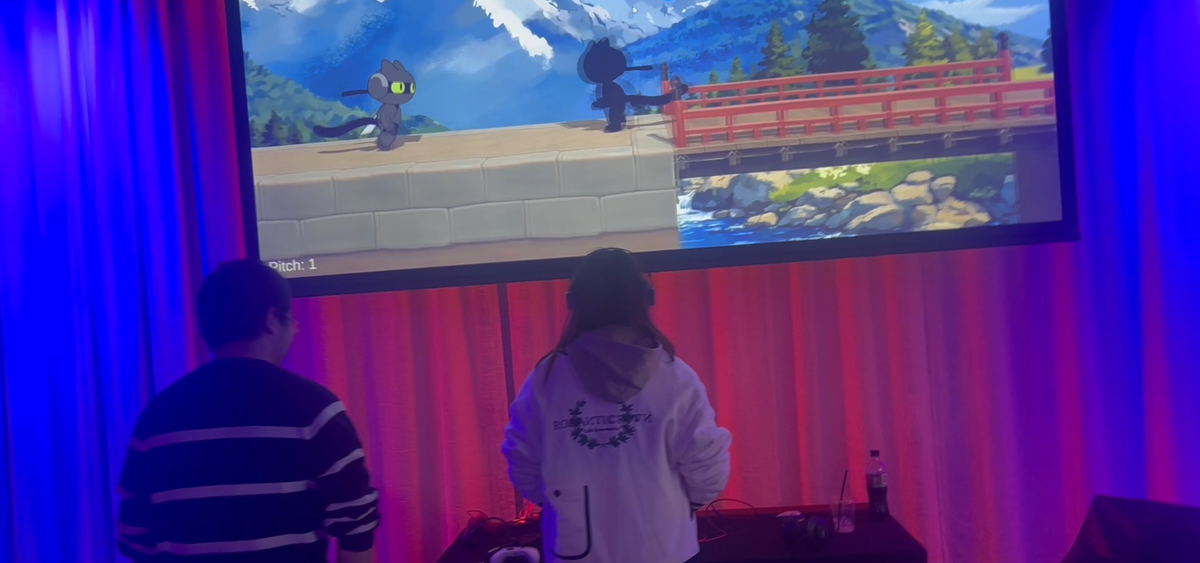
I had the opportunity to show Beatland: Ninjapaw's Revenge at ACMI (Australia's national museum of screen culture) in Melbourne, and put the game in front of an audience for the first time.
The purpose of the event was simple: put the game in the hands of players and gather as much feedback as possible. It was a very fun experience, and I came back with quite a few new ideas to work on.
Overall, people seemed to enjoy the game and, more often than not, they wanted to play again, which was probably the most encouraging feedback I could get from a first playable.
Gameplay with a Drum Kit
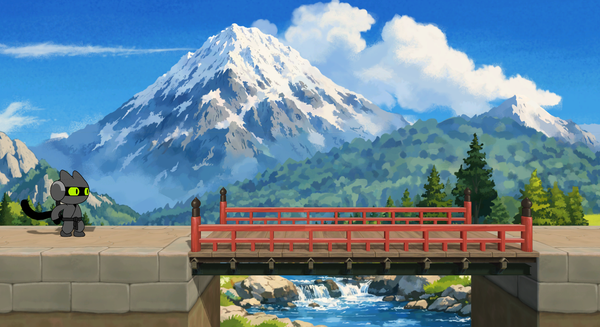
The core idea of the game is that you play as Ninjapaw, a small ninja cat who has to fight waves of enemies coming toward him.
Enemies currently come in two flavors: dark and light. They are tied to the bass drum and snare drum of the song respectively. This means that, in order to survive and reach the end of the level, the player effectively has to perform the drum track of the song.
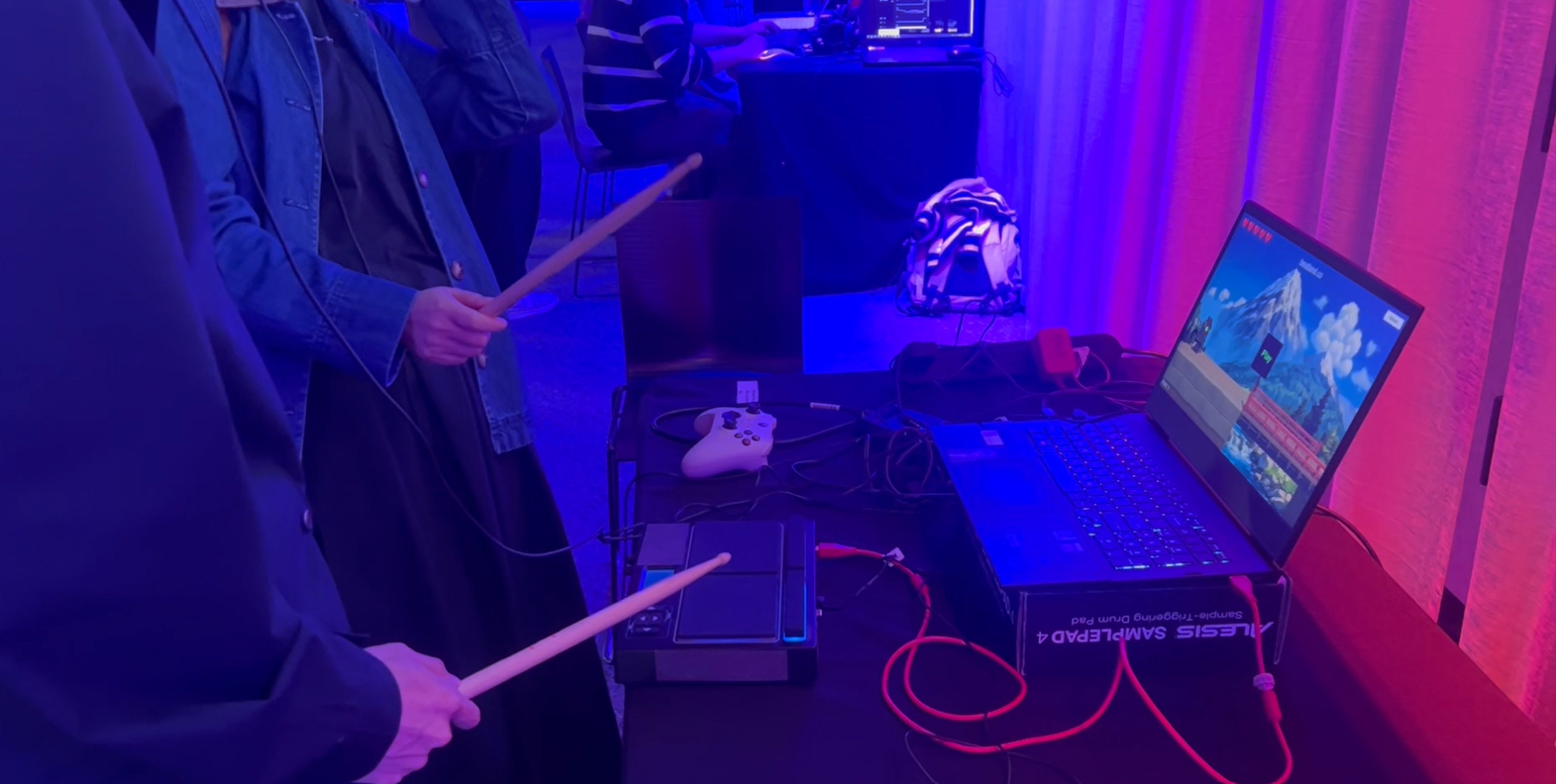
The game will support standard controls such as a keyboard or game controller, but I thought it would be cool to also play it with a small MIDI drum kit, making the drumming aspect of the experience much more explicit.
And that's how we played it at ACMI.
The Feedback
Players mentioned that they liked the graphics, the character, and the animation, even though the game is still very much a work in progress.
Some areas aren't finished yet, including the enemies, UI, visual effects, and final soundtrack. (I used Suno tracks for this test).
Others need more work, such as the variety of attack animations and gameplay mechanics. But despite all of that, players still managed to immerse themselves in the experience, and that was what mattered most to me.
Some players tried the game with the music running at an accelerated speed and literally told me that they could feel the adrenaline. Increasing the speed is something I was already planning to use as a mechanic, so I was particularly happy to hear that.
I liked the adrenaline part :)
Something else unexpected happened: a few couples decided to play collaboratively, with one person taking care of the dark enemies and the other handling the light ones. I had never played the game that way myself, but it looked genuinely fun. That might eventually lead to a local two-player mode.
Another interesting idea emerged from something I had rushed just a few days before the event. I needed to finish a few things to get the playable ready, including the motion trails for Ninjapaw's air kick and sword attack.
I decided to draw them with a rough, sketchy, notebook-doodle style. It was mostly a quick solution, but several players specifically mentioned that they liked it. So I might lean further into that technique.
Next Steps Before Releasing a Demo
In roughly this order of priority:
- Clean up the current code
- Create the enemy graphics and animations
- Design and implement the UI
- Add visual effects
- Add a menu and audio latency calibration system
- Compose and produce the music
- Implement the speed mechanics
- Add more variety to Ninjapaw's animations
- Do an optimization pass
- Design and implement more gameplay mechanics
There is still quite a bit to do before I can release a proper demo, but seeing people actually play the game, and in some cases immediately wanting to play again, made this first audience test feel like an important milestone.